Block foundation problems typically reveal themselves through visible cracks, water infiltration, efflorescence (white powdery residue), or structural settling. Early detection and professional intervention prevent minor issues from escalating into catastrophic structural failures that can cost tens of thousands to remedy. Most foundation distress signals appear gradually, giving attentive homeowners the chance to act before damage becomes severe.
Why Block Foundations Are Vulnerable in Coastal Florida
South Florida’s unique environment creates specific challenges for concrete block foundations. The combination of high water tables, seasonal flooding, sandy soil composition, and salt air exposure accelerates deterioration in ways not seen in drier climates. Hurricane-force winds and heavy rainfall events place extraordinary lateral pressure on foundation walls, often exceeding original design specifications.
The porous nature of concrete block allows moisture to migrate through the material itself, not just through visible cracks. When groundwater rises during the rainy season, hydrostatic pressure forces water through microscopic channels in the block. Over time, this constant moisture movement leaches out cement paste and weakens the structural integrity of individual blocks.
Understanding How Foundations Fail Over Time
Foundation deterioration follows predictable patterns. The process begins with minor hairline cracks that allow water entry. Moisture inside the block undergoes freeze-thaw cycles or thermal expansion, widening the initial crack. Rebar corrosion begins when water reaches embedded steel reinforcement, causing rust that expands and spalls the surrounding concrete.
Soil movement plays an equally important role. When saturated sandy soil loses its bearing capacity, differential settling occurs where one section of the foundation drops while adjacent areas remain stable. This uneven movement creates shear forces that block foundations cannot withstand, resulting in stepped cracking along mortar joints or diagonal fractures through individual blocks.
Visible Cracks That Signal Structural Distress
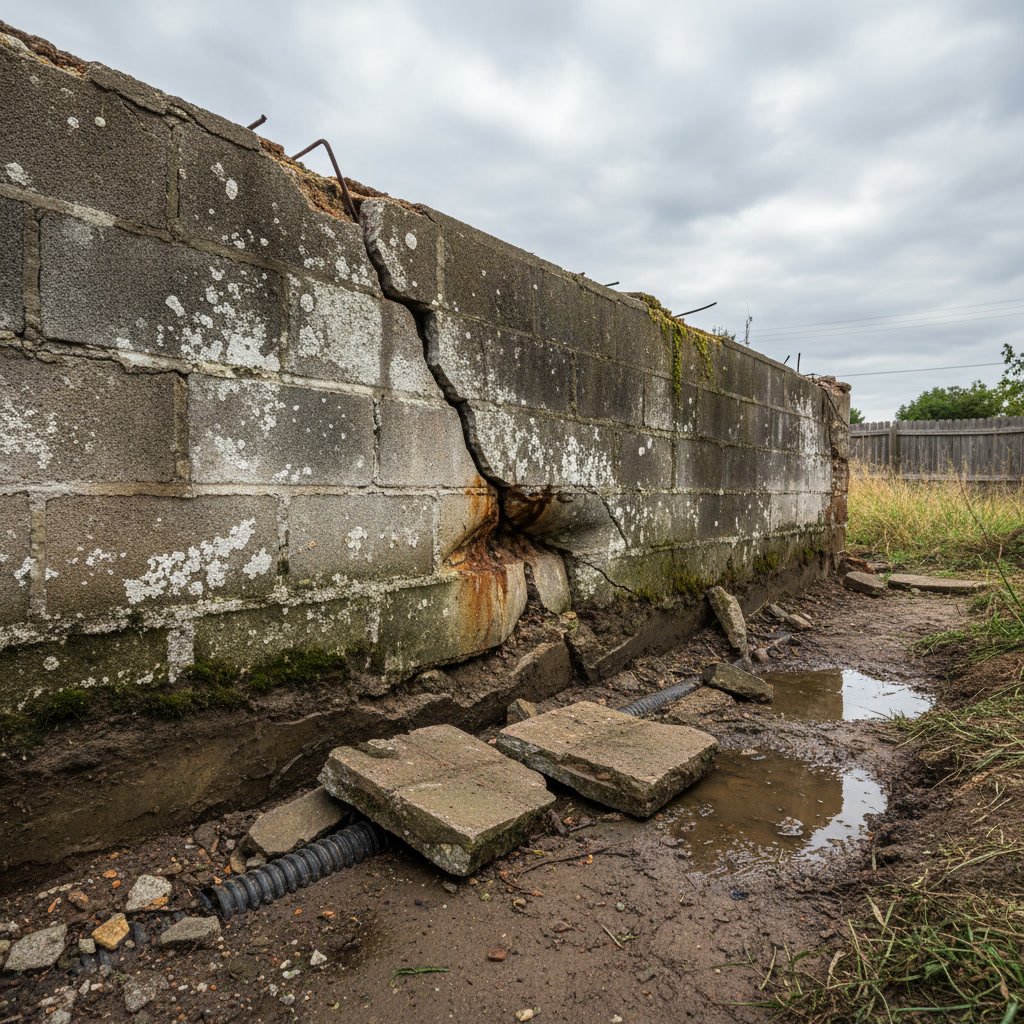
Not all foundation cracks indicate serious problems, but certain patterns demand immediate professional evaluation. Horizontal cracks running parallel to the ground surface suggest lateral soil pressure has exceeded wall capacity. These cracks often appear at mid-height where bending stress concentrates, and they can signal imminent wall failure if left unaddressed.
Stair-step cracks following mortar joints indicate differential settling. When cracks exceed 1/4 inch width or show signs of recent movement (clean edges, no weathering), the foundation is actively shifting. Vertical cracks near corners typically result from shrinkage or minor settling and pose less immediate concern, though they still allow water infiltration and should be sealed.
Water Infiltration and Moisture Problems in Palm Beach
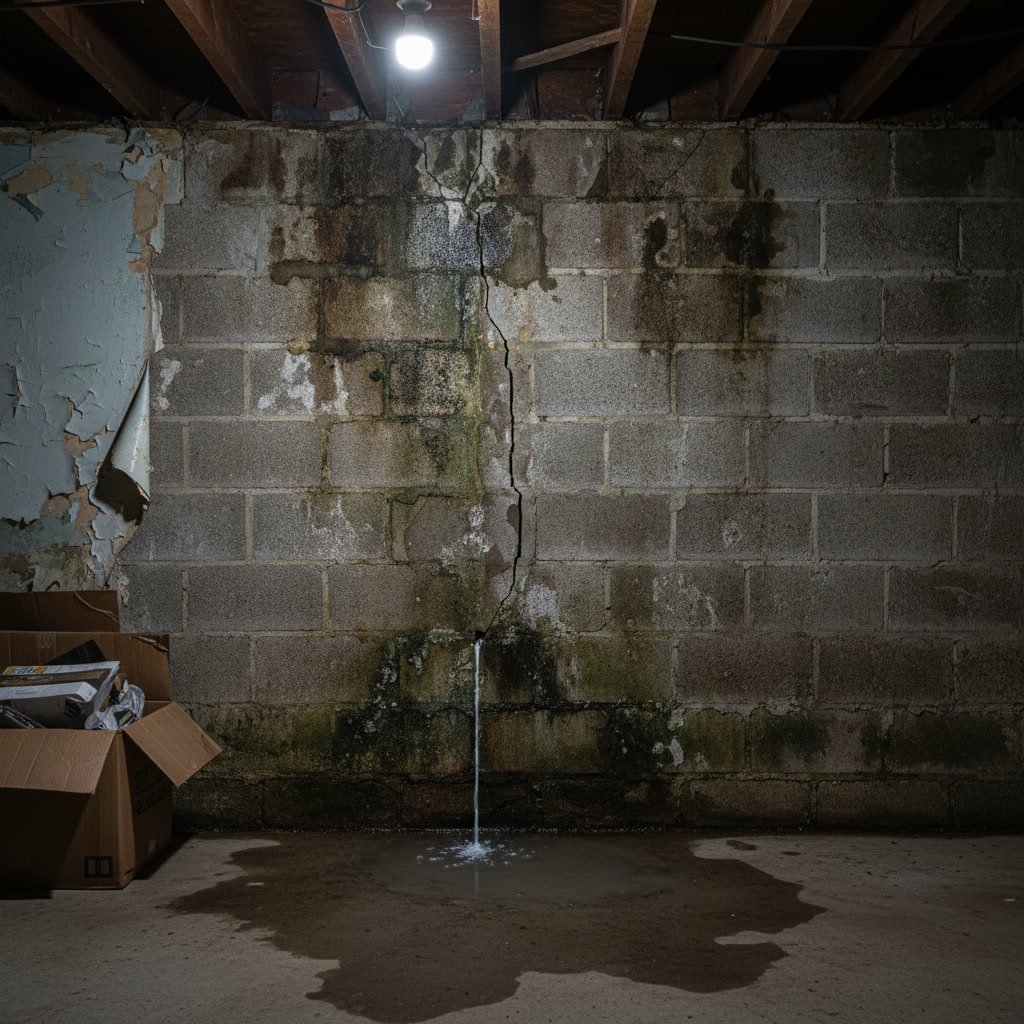
Standing water after rainfall, damp basement walls, or musty odors point to compromised waterproofing. In coastal areas, the water table can rise to within inches of floor level during wet season. Foundation walls without proper exterior waterproofing or drainage systems allow groundwater to seep through, creating persistent moisture problems that promote mold growth and material decay.
Look for water stains on interior foundation walls, particularly along the wall-to-floor joint. Peeling paint or wallpaper in finished basements often conceals significant moisture intrusion. Efflorescence, the white crystalline deposit that appears on block surfaces, forms when water carries dissolved salts to the surface and evaporates, leaving mineral residue behind. This is a clear indicator that water is moving through your foundation.
Identifying Structural Movement and Settlement
Doors and windows that suddenly stick or refuse to close properly often signal foundation movement. As walls shift, openings become racked out of square by even small amounts of settlement. Gaps between walls and ceiling, separating crown molding, or floors that have developed new slopes all suggest the foundation has moved.
Walk around your home’s exterior and look for the foundation pulling away from the structure above. Gaps wider than 1/8 inch between the sill plate and foundation wall indicate serious movement. Interior signs include cracks in drywall that radiate from door or window corners, tile floors that have cracked in linear patterns, or cabinets that no longer sit level.
Bulging or Bowing Foundation Walls
Foundation walls should be perfectly vertical. When exterior soil becomes saturated and expands, it pushes against the wall with tremendous force. This lateral pressure can cause inward bowing that may not be immediately obvious to the untrained eye. Use a long straightedge or string line to check for deflection.
Walls bowing more than one inch at mid-height require urgent professional assessment. The condition tends to worsen with each rain event as soil pressure increases. In extreme cases, walls can suddenly fail and collapse inward, causing catastrophic damage. Early intervention with reinforcement systems prevents progression and costs far less than emergency reconstruction.
Deteriorating Mortar Joints and Spalling Blocks
Mortar joints that have eroded to depths greater than 1/2 inch compromise wall integrity. These recessed joints allow more water penetration and reduce the structural bond between blocks. Tap the mortar with a screwdriver; if it crumbles easily or can be scraped away without much force, the joint has lost its strength and needs repointing.
Spalling occurs when the face of a block flakes or chips away, typically caused by internal moisture freezing or rebar corrosion. Once spalling begins, it accelerates rapidly because the damaged surface allows even more water entry. Understanding masonry waterproofing fundamentals helps homeowners recognize when professional intervention becomes necessary.
Warning Signs Inside Your Home
Foundation problems manifest inside the living space in multiple ways. Cracks in ceramic tile floors, especially those running in straight lines across multiple tiles, indicate the slab beneath has cracked. Uneven or sloping floors suggest differential settlement has occurred. Use a marble or level to test floor surfaces in multiple rooms.
Baseboards separating from walls, nail pops in drywall, or doors that swing open or closed on their own all point to structural movement. Cracks that widen at the top but remain tight at the bottom show active settlement. Document crack width with photographs and measurements over time to determine whether movement is ongoing or has stabilized.
Drainage and Grading Issues That Accelerate Damage
Improper site drainage concentrates water against foundation walls, overwhelming waterproofing systems and increasing hydrostatic pressure. Gutters that discharge within 10 feet of the foundation, negative grading that slopes toward the house, or missing downspout extensions all contribute to premature foundation failure.
The ground surrounding your foundation should slope away at a minimum grade of 6 inches over the first 10 feet. Standing water that pools against the foundation after rainfall indicates inadequate drainage. French drains, swales, or regrading may be necessary to redirect water away from vulnerable walls. Professional masonry repairs often include drainage improvements as part of a comprehensive solution.
When to Schedule Professional Inspection
Schedule an inspection immediately if you observe horizontal cracks wider than 1/4 inch, any wall bowing, active water infiltration, or cracks that show recent movement. Waiting for convenient timing allows minor problems to multiply into major structural issues. Foundation specialists use laser levels, moisture meters, and structural analysis to determine the extent of damage and recommend appropriate remediation.
Annual inspections make sense for homes over 20 years old or those in areas with known soil instability. A professional can detect early warning signs before they become visible to homeowners. Mark Pecoraro Masonry brings over four decades of experience identifying and resolving foundation issues throughout the region, combining diagnostic expertise with proven repair techniques.
Protecting Your Foundation Investment
Your home’s foundation represents the most critical structural component and the most expensive to replace. Recognizing warning signs early allows for targeted repairs that restore integrity without the cost and disruption of full replacement. Most foundation distress results from water intrusion and soil movement, both of which can be controlled through proper waterproofing, drainage management, and timely repairs.
Regular maintenance extends foundation life significantly. Keep gutters clean, maintain proper grading, seal cracks promptly, and address drainage problems before they cause structural damage. Professional evaluation provides peace of mind and often reveals simple solutions that prevent major problems from developing.
If you have noticed any of these warning signs around your property, a thorough foundation assessment will identify problems and outline appropriate solutions. With the right approach, most foundation issues can be resolved effectively, protecting your home’s structural integrity for decades to come. Contact +15619510233 to schedule a professional inspection and receive an honest evaluation of your foundation’s condition.