Stone retaining walls showing signs of distress require immediate professional attention to prevent collapse and property damage. Common indicators include visible cracks, bulging sections, tilting, poor drainage, and separation between stones. Addressing stone retaining wall repair early protects your landscape investment and prevents more expensive reconstruction down the road.
Why Stone Retaining Walls Fail Over Time
Retaining walls work hard every day to hold back tons of soil and manage water pressure behind them. Even well-built walls face constant stress from moisture, freeze-thaw cycles in cooler months, root growth, and soil settlement. Florida’s sandy soils and heavy seasonal rains create unique challenges for retaining structures. Over years of service, mortar joints deteriorate, drainage systems clog, and the wall’s structural integrity slowly weakens.
Understanding why walls fail helps property owners recognize warning signs before minor damage becomes catastrophic. The most common cause is poor drainage, which allows water to accumulate behind the wall. This hydrostatic pressure pushes outward with tremendous force, especially after heavy storms. Without proper weep holes or drainage pipes, even a perfectly constructed wall will eventually bow or collapse.
The Role of Proper Construction in Wall Longevity
Quality construction determines how well a retaining wall withstands time and stress. Walls built without adequate footings, improper backfill materials, or insufficient drainage systems show problems within just a few years. A properly built stone retaining wall should include a compacted gravel base, drainage aggregate behind the wall, and either weep holes or perforated drainage pipes to channel water away.
The mortar mix used in stacked stone walls also matters significantly. Mortar that is too hard cracks easily, while mix that is too soft crumbles under pressure. Professional masons select mortar formulations based on the specific stone type and environmental conditions. This expertise, refined over decades of masonry work, makes the difference between a wall that lasts 15 years and one that serves for 50.
Visible Cracks and What They Tell You
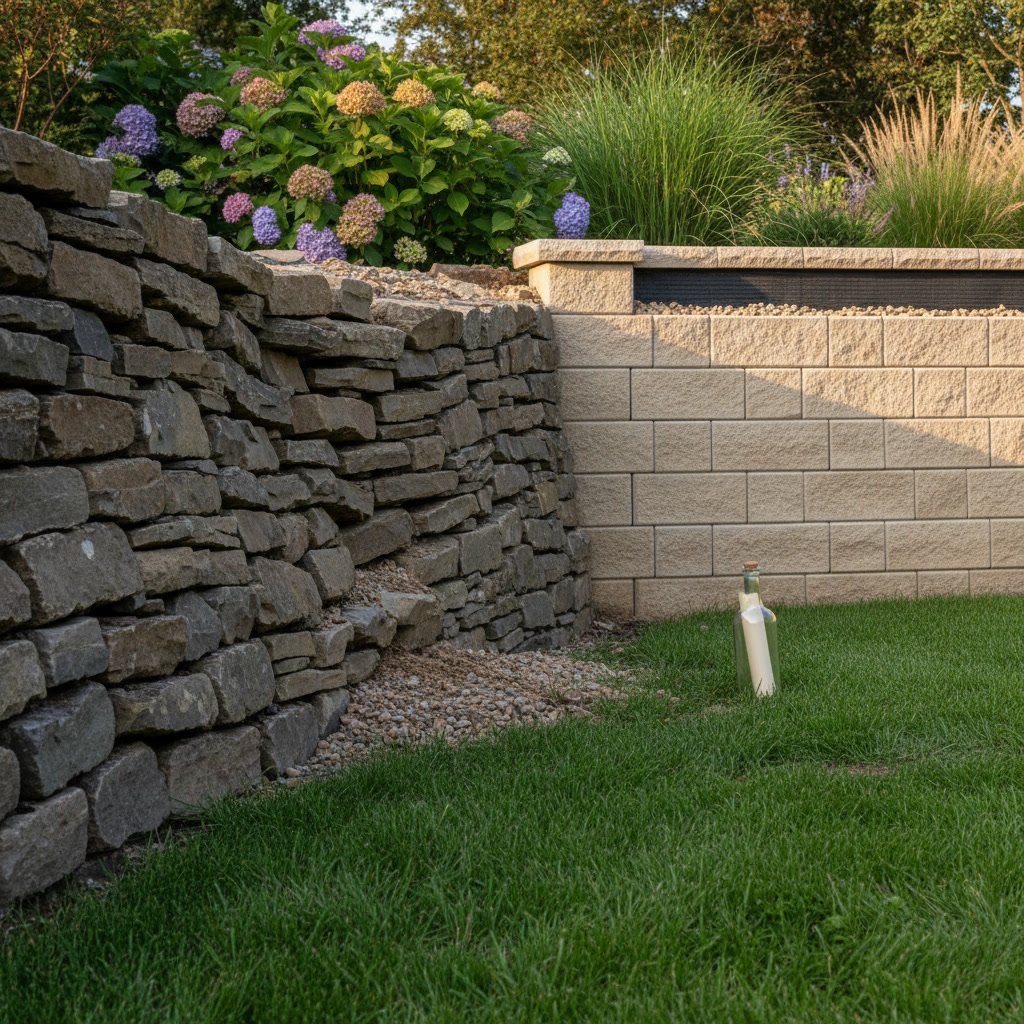
Hairline cracks less than one-eighth inch wide often result from normal settling and may not indicate serious problems. However, cracks wider than a quarter inch, especially those that run horizontally or appear in stair-step patterns through the mortar joints, signal structural movement. Vertical cracks through individual stones suggest the wall has shifted beyond its design tolerance.
Monitor existing cracks by marking their ends with pencil and dating your marks. If cracks grow longer or wider over weeks or months, the wall continues to move and needs professional assessment. Cracks that leak water during rain indicate the drainage system has failed, allowing moisture to penetrate and weaken the structure from within.
Bulging and Bowing in Retaining Walls
When sections of your retaining wall push outward or develop a noticeable curve, the structure is actively failing. This bulging happens when soil pressure exceeds the wall’s capacity to resist, often because drainage has failed or the backfill has become saturated. A bulge as small as two inches over an eight-foot section indicates serious structural compromise.
Check your wall’s alignment by standing at one end and sighting down its length. Any deviation from a straight line or designed curve warrants immediate attention. Bulging walls rarely self-correct and typically worsen rapidly, especially during rainy seasons when soil behind the wall becomes waterlogged and heavy.
Tilting and Leaning Beyond the Design Angle in Palm Beach Properties
Most retaining walls incorporate a slight backward lean, called batter, that helps resist soil pressure. This intentional angle typically ranges from two to six degrees. If your wall has developed a forward lean or the backward angle has noticeably increased, the foundation has shifted or the wall is rotating outward from its base.
Measure tilt by holding a long level against the wall face and measuring the gap at the top. Any forward lean is cause for concern. Properties in coastal areas face additional challenges from sandy soils that shift more readily than clay-based soils found inland. Regular inspection after major storms helps catch tilt problems before they progress to failure.
Mortar Joint Deterioration and Stone Separation
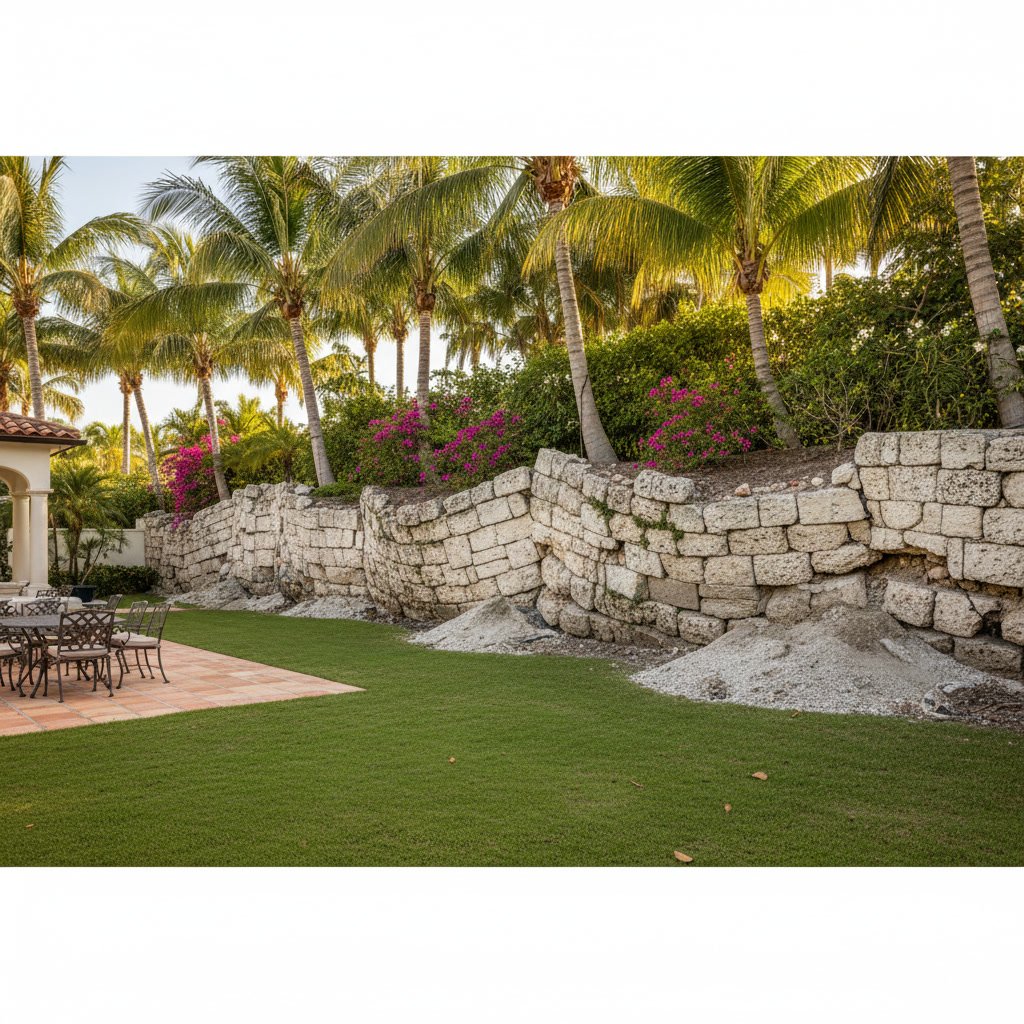
Mortar joints should remain firm and fully fill the spaces between stones. When mortar becomes soft, crumbly, or recedes more than half an inch behind the stone faces, the wall loses strength. You should not be able to easily scrape out mortar with a screwdriver or pocket knife. Deep erosion of joints allows water infiltration and reduces the wall’s ability to function as a single unified structure.
Separation between stones creates gaps where none existed during construction. These openings allow soil to wash through, creating voids behind the wall that accelerate failure. If you notice sand or soil staining below gaps in your wall, erosion is actively undermining the structure. This type of damage shares similarities with other masonry repairs that address material degradation over time.
Drainage Problems and Water Accumulation
Functional drainage is non-negotiable for retaining wall stability. Weep holes should release water after every significant rain. If these openings stay dry or have become clogged with soil and debris, water is trapped behind your wall. Standing water at the wall’s base, especially 24 hours after rain has stopped, indicates drainage failure.
Staining patterns on the wall face reveal where water travels. White mineral deposits, called efflorescence, show that moisture is migrating through the wall rather than draining properly. Dark stains and organic growth indicate persistent dampness. These conditions not only threaten structural stability but also accelerate freeze-thaw damage during occasional cold snaps.
Soil Erosion and Washout Behind the Wall
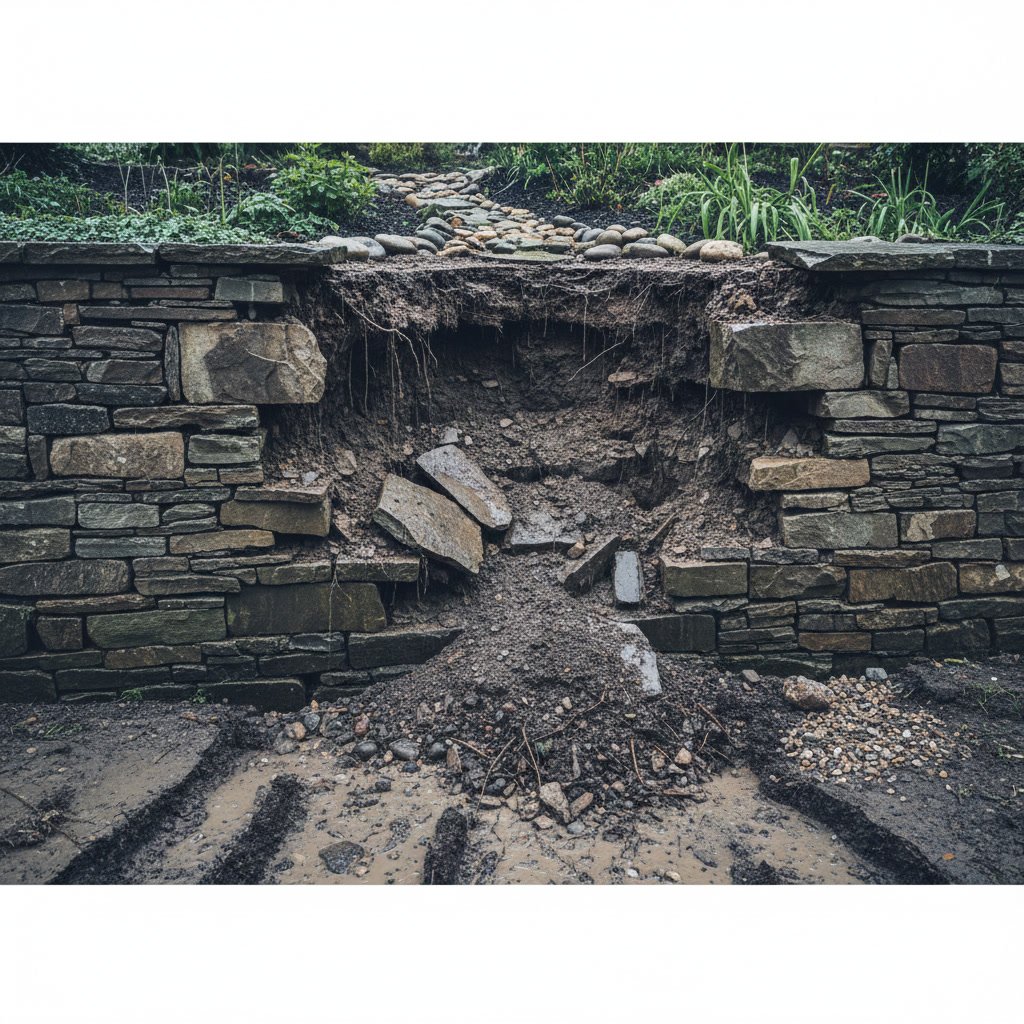
Voids behind a retaining wall remove the support the structure was designed to contain. These cavities form when water washes fine soil particles through gaps in the wall or when drainage systems fail. Telltale signs include settling of the ground surface behind the wall, sudden appearance of sinkholes, or noticeable changes in how the lawn or plantings sit relative to the wall top.
Tap along the wall face with your knuckles. Solid sections produce a dull thud, while areas with voids behind them sound hollow. This simple test helps locate problem zones before they become visible from the outside. Addressing erosion requires not just repairing the wall but also correcting the drainage issues that caused the washout.
Plant Root Damage and Vegetation Growth
Trees and large shrubs planted too close to retaining walls cause slow but relentless damage. Roots growing between stones gradually push them apart with surprising force. Even small plants growing from mortar joints indicate that the joints have deteriorated enough to accumulate soil and support growth. Ivy and other climbing vines may look attractive but hide damage and accelerate mortar deterioration by trapping moisture.
Maintain a minimum three-foot clearance between tree trunks and your retaining wall. If roots have already infiltrated the structure, removal requires care to avoid sudden collapse. The professional approach involves selective cutting, temporary bracing, and systematic reconstruction of affected sections. Similar attention to detail applies across all masonry maintenance work that preserves structural integrity.
When to Call Professionals Versus Monitoring the Situation
Minor cosmetic issues like small cracks, light efflorescence, or a single loose stone may not require immediate repair but should be monitored regularly. Take photos from the same position every three months to document any changes. Create a simple measurement log for any cracks, noting their length and width on each inspection date.
Call professionals immediately if you observe active bulging, forward tilt, large cracks wider than half an inch, multiple loose stones, significant erosion, or any sudden changes after storms. Walls protecting structures, driveways, or valuable landscaping deserve professional assessment even for moderate damage. The cost of professional masonry repair is substantially less than the expense of rebuilding a collapsed wall and repairing the additional property damage that follows failure.
Protecting Your Property Investment Through Timely Action
Stone retaining walls represent significant investments in both materials and skilled labor. Recognizing the warning signs of structural distress allows you to address problems while repairs remain manageable and affordable. Regular inspection, proper drainage maintenance, and prompt professional attention to damage protect your wall and the property it supports.
Mark Pecoraro Masonry brings over four decades of specialized experience to every retaining wall evaluation and repair. Understanding how walls fail, what the warning signs mean, and how to correct problems before they escalate separates experienced craftsmen from general contractors. Your property deserves the careful attention and technical expertise that only comes from years of dedicated focus on stone and masonry work.
If you have noticed any of the warning signs discussed in this article, professional assessment provides peace of mind and a clear path forward. Mark Pecoraro Masonry serves properties throughout the region with the same meticulous attention to detail that has built our reputation. Contact us at +15619510233 to schedule an evaluation of your retaining wall and receive expert recommendations tailored to your specific situation.